
Mid-Market IT: Control Cloud Costs & Modernize Storage with Intelligent Data.

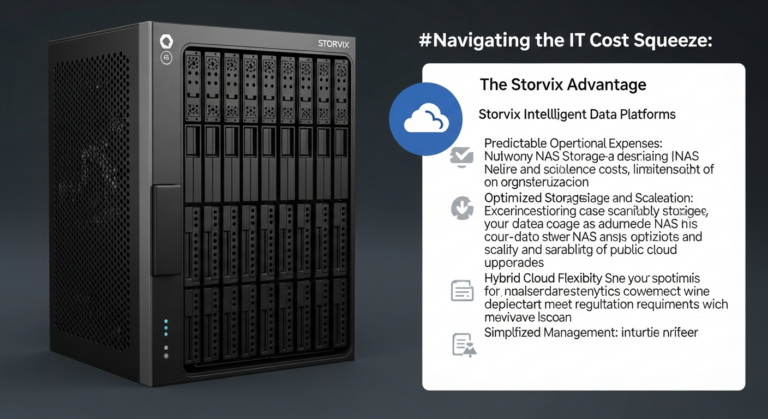
Key takeaways for IT leaders
Mid-market IT shops and MSPs are being squeezed from two directions: on-prem NAS hardware is aging and due for disruptive, expensive refresh cycles, while cloud-first fixes like Azure File Sync (AFS) trade capital pain for operational and usage-driven costs that are harder to forecast and control. The operational problem is predictable capacity and budget planning — not just where data lives, but how often it moves, who triggers movement, and what each access or snapshot actually costs. That uncertainty drives risk (surprise invoices, audit exposure) and forces conservative procurement decisions that erode margins.
Traditional storage thinking — buy a larger NAS, or ‘‘lift and sync’’ to Azure Files using AFS — ignores lifecycle economics. AFS is not a flat substitution for on-prem; it decomposes cost into storage, transactions, snapshot/backup, and egress, which can spike depending on access patterns, retention windows, and disaster recovery tests. The strategic shift sensible IT leaders should make is toward an intelligent data platform model (examples: policy-driven lifecycle, predictable cost controls, centralized retention and audit capabilities). Platforms like STORViX are designed to treat data lifecycle, access behavior and compliance as first-class concerns so you can trade one unpredictable cost center for a managed, controllable one — reducing surprise spend and operational risk while preserving performance where it matters.
Do you have more questions regarding this topic?
Fill in the form, and we will try to help solving it.


