
Control Cloud Costs: Intelligent Data Lifecycle Management for GCS and On-Prem

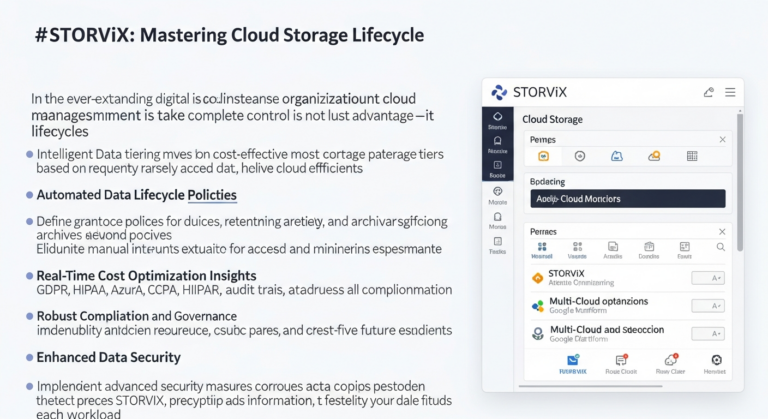
Key takeaways for IT leaders
Mid-market IT teams and MSPs are getting squeezed from every side: escalating infrastructure costs, forced on-prem refresh cycles, tighter compliance windows, and thinning margins. Many teams move data to Google Cloud Storage (GCS) expecting savings, but without disciplined lifecycle and access controls the cloud becomes another source of unpredictable spend — think egress charges, retrieval fees for cold tiers, redundant copies, and duplicated operational effort across on‑prem and cloud stacks.
The hard truth is traditional storage thinking (buy more hardware, bolt on replication, hope for the best) fails in a hybrid/cloud world. The practical answer is to treat storage as an intelligent data platform: a policy-driven control plane that automates placement across GCS storage classes and on‑prem targets, enforces retention/immutability for audits, minimizes egress and retrieval hits, and gives predictable lifecycle economics. Tools like STORViX act as that control plane — not to hype cloud, but to give IT teams lifecycle control, reduce manual work, and make costs and compliance outcomes predictable.
Do you have more questions regarding this topic?
Fill in the form, and we will try to help solving it.


