
Control Cloud Costs & Compliance: Intelligent Data Platforms for Google IaaS

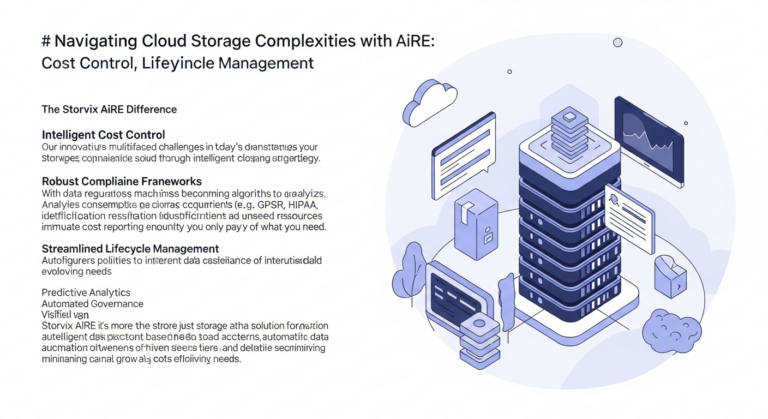
Key takeaways for IT leaders
Operational reality for mid-market IT and MSPs: infrastructure costs are rising, compliance requirements are getting stricter, and your teams are being asked to do more with less margin. Google’s IaaS offerings (compute and object storage) are attractive for scale and flexibility, but they shift cost into operational line items — egress, retrieval, replication and API charges — and introduce policy complexity around storage classes and data locality. That combination often means higher-than-expected monthly bills, hard-to-predict refresh and migration costs, and new compliance headaches when data spans on-prem and cloud.
Traditional storage thinking — buy an array, bolt on backup, refresh hardware every 3–5 years — won’t solve this. Siloed arrays and point solutions force manual data movement, generate duplicated copies, and don’t provide the policy automation required to control cross-border data, lifecycle transitions, or egress costs. The practical strategic shift is toward intelligent data platforms that treat the storage stack as a lifecycle-managed asset: control where data lives, automate tiering and retrieval, and make cost and compliance outcomes predictable. Platforms like STORViX integrate with Google IaaS to reduce unnecessary cloud spend, enforce locality and immutability policies, and give IT and MSP leaders the lifecycle controls they need without the hype.
Do you have more questions regarding this topic?
Fill in the form, and we will try to help solving it.


