
Azure Files Cost Control: Lifecycle Management & Predictable Economics with Intelligent Platforms

What decision-makers should know
Azure Files solves a lot of legacy pain—scalable SMB/NFS access, integration with Azure AD, and easy cloud-native sharing—but it also introduces a predictable set of operational problems that mid-market IT shops and MSPs are already paying for. The cost drivers aren’t the headline price per GB alone; they’re the compound effects of snapshot retention, small-file metadata, egress and transaction charges, hot-tier provisioning for unpredictable IO, and the lack of lifecycle controls that force more data to sit in expensive tiers longer than it should. Left unchecked, those factors turn a seemingly reasonable cloud bill into a budgeting crisis.
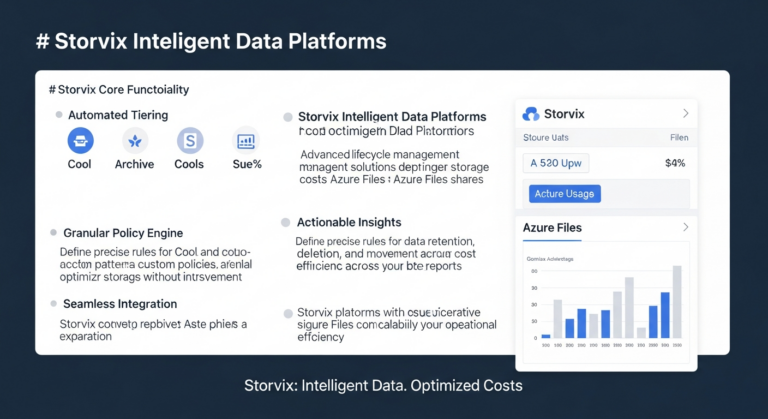
Traditional approaches—lifting existing file estates to Azure without classification, manual retention, or policy enforcement—fail because they assume cloud storage is cheaper by default. It isn’t. The strategic shift that actually controls cost and risk is toward intelligent data platforms like STORViX that add policy-driven lifecycle management, hybrid caching to limit egress, predictable capacity controls, and integrated compliance workflows. That combination stops spend from being driven by inertia and gives IT back lifecycle control, auditability, and predictable unit economics.
Do you have more questions regarding this topic?
Fill in the form, and we will try to help solving it.


